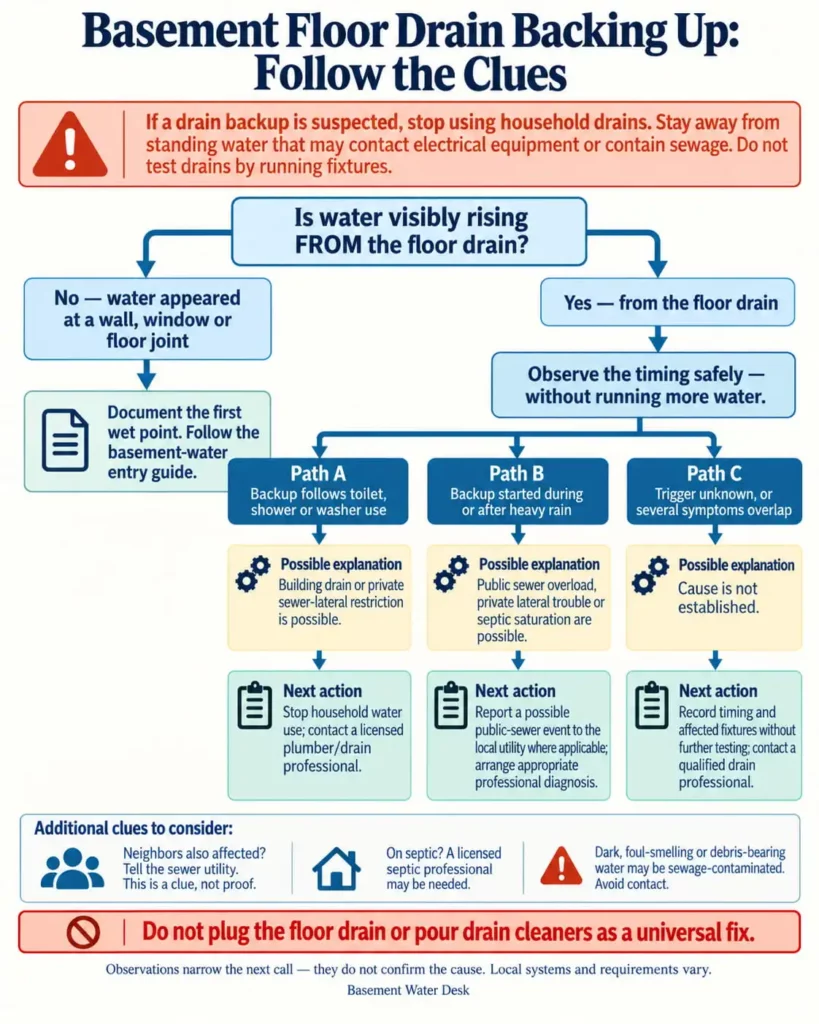
If water is rising out of a basement floor drain, treat it as a possible sewer or drainage backup until the source is identified. Stop sending water down household drains, keep people and pets away, and avoid the area if water may reach electrical equipment. Whether the event follows heavy rain or normal fixture use is an important clue—not a diagnosis.
Use this 60-second source check
Copiar
| What you observe | Possible cause — not confirmed | Low-risk check | Best next call |
|---|---|---|---|
| Floor drain rises when a toilet, shower or washer runs | A restriction in the building drain or private sewer lateral | Stop using water and note which fixture was used immediately before the rise. | Licensed plumber or drain/sewer contractor. |
| Several low fixtures gurgle or drain slowly | A shared downstream restriction is more likely than one clogged fixture | Do not keep testing fixtures. Record which drains are affected. | Licensed plumber or drain/sewer contractor. |
| Backup begins during or just after heavy rain | An overloaded public sewer, stormwater entering the sanitary system, a private lateral problem or a saturated septic system | Ask nearby neighbors whether they have the same problem; check your utility’s outage/overflow reporting page. | Municipal sewer utility first where available; plumber if the public main is clear. |
| Only the floor drain is slow; no reverse flow | Local debris or a trap/branch issue may be possible | Note odor, water level and whether the condition changes without running fixtures. | Plumber if it persists. Do not assume it is safe to snake a line. |
| Dark, foul-smelling or debris-bearing water | Sewage contamination is possible | Keep out. Photograph from a dry location if safe. | Utility/plumber plus qualified cleanup help. |
| Clear water appears at a wall, cove joint or window instead | Groundwater or surface-water entry may be more likely than drain backup | Mark the first wet point and compare it with the drain level. | Start with the heavy-rain entry guide. |
If the floor drain itself is not rising and clear water appears through the slab, floor cracks or nearby joints, use the floor seepage guide before assuming the drain or sewer is the source.
What to do now
- Stop household water use. Do not run the washer, dishwasher, shower or toilets while a shared drain may be backed up.
- Separate people from the area. Keep children and pets away. Avoid contact with water that may contain sewage.
- Protect against electrical shock. Do not enter water or touch wet electrical equipment. If power must be disconnected, have the utility or an electrician do it from a safe location.
- Document before cleanup. If safe, photograph the water level, the first location it appeared and damaged materials. Note rain timing and which fixtures were in use.
- Report a possible public-sewer backup. Many utilities ask residents to call promptly so they can inspect the public main. Reporting rules and assistance programs are local.
- Arrange private-side diagnosis. If the utility finds no public-main problem—or if the symptom occurs when household fixtures run—a licensed plumber or sewer contractor can assess the building drain and lateral.
Do not block the floor drain as a universal fix
A drain plug, standpipe or backwater valve can be appropriate in a designed system, but each changes where water can go. A plug may also prevent an interior plumbing leak from draining. A backwater valve must match the plumbing layout and local code, and it does not remove a private-line obstruction. Have a licensed professional identify the route and approval requirements before altering the drain.
After the water recedes
- Confirm whether the water was sewage-contaminated before choosing cleanup methods.
- Keep records of utility calls, plumber findings, photos and receipts.
- Have wet electrical equipment inspected before it is energized.
- Dry cleanable materials promptly; discard porous items that cannot be safely cleaned and dried.
- Ask for the camera, cleaning or repair findings in writing instead of accepting “roots” or “city sewer” as an unsupported conclusion.
Questions that narrow the diagnosis
| Question | Why it matters |
|---|---|
| Did the drain rise only during heavy rain? | It raises the likelihood of system overload or rain-related inflow, but does not locate the fault. |
| Did running a fixture make the level rise? | It points toward a restriction downstream of that fixture connection. |
| Were neighboring homes affected? | Multiple homes can indicate a public-system event; a single home can still have a private lateral issue. |
| Is the home on septic? | A saturated or malfunctioning onsite system requires different authorities and service providers. |
| Was the water clearly contaminated? | It changes personal-protection, cleanup and disposal decisions. |
Sources and scope
Requirements vary by model and jurisdiction. Use the exact equipment manual and local authority when either is more specific than this guide.
- CDC — Safety Guidelines: Reentering Your Flooded Home — Electrical, sewage and generator safety after flooding.
- CDC — Safety Guidelines: Floodwater — Floodwater may contain sewage, chemicals and physical hazards.
- US EPA — Sanitary Sewer Overflow Frequent Questions — Health context for untreated sewage and basement cleanup.
- City of Columbus — Flooding and Water Leak Information — Separates wall/floor/window seepage from sanitary backup through a basement drain.
- City of Madison — Dealing with a Sanitary Sewer Backup — Stop household water use, report the backup and observe electrical precautions.
- City of Minneapolis — Sewer Problems in the Home — Rain-related sewer stoppages and floor-drain odor context.