A water-powered backup sump pump can be a strong outage backup only when the home has dependable municipal water pressure, the device is allowed locally, required backflow protection is installed, and its output matches the expected inflow at the real pumping head. It normally is not an outage solution for a home whose water supply depends on an electric well pump.
This is a plumbing installation, not a drop-in accessory
The device connects potable water to equipment near sump water. Backflow protection, permits, pipe sizing and discharge routing are jurisdiction- and model-specific. Have the water purveyor or building department confirm requirements before purchase.
Pass these six checks before comparing models
| Requirement | What to verify | Why it can disqualify the option |
|---|---|---|
| Water source | Municipal supply remains available during the outages you are planning for. | A well pump generally stops when utility power fails unless the well has its own backup power. |
| Dynamic pressure | Pressure and flow at the installation point while other fixtures may be in use. | Manufacturer flow ratings change with supply pressure and pumping head. |
| Local approval | Water utility, plumbing code, permit and inspection rules. | Some authorities restrict these devices or require specific cross-connection protection. |
| Backflow protection | Exact approved device and installation location. | Potable water must be protected from a cross-connection with sump water. |
| Discharge path | Pipe diameter, vertical lift, horizontal run, fittings, outlet and freeze exposure. | A restrictive route can reduce output and must discharge where water will not return to the foundation. |
| Expected inflow | Measured primary-pump cycle volume and frequency during the worst realistic storm. | A backup that moves less water than enters only delays overflow. |
How it works
Municipal water passes through an engineered ejector that creates suction and lifts water from the sump. Both streams leave through the specified discharge arrangement. There is no battery driving the pump, but there is still a float or water-level control and there may be an alarm. Exact ratios, pressure ranges and pipe layouts are model specific. For example, Liberty publishes a 20–100 psi inlet range for its SJ10 and states that performance varies with pressure and pumping head; that is not a universal specification for every product.
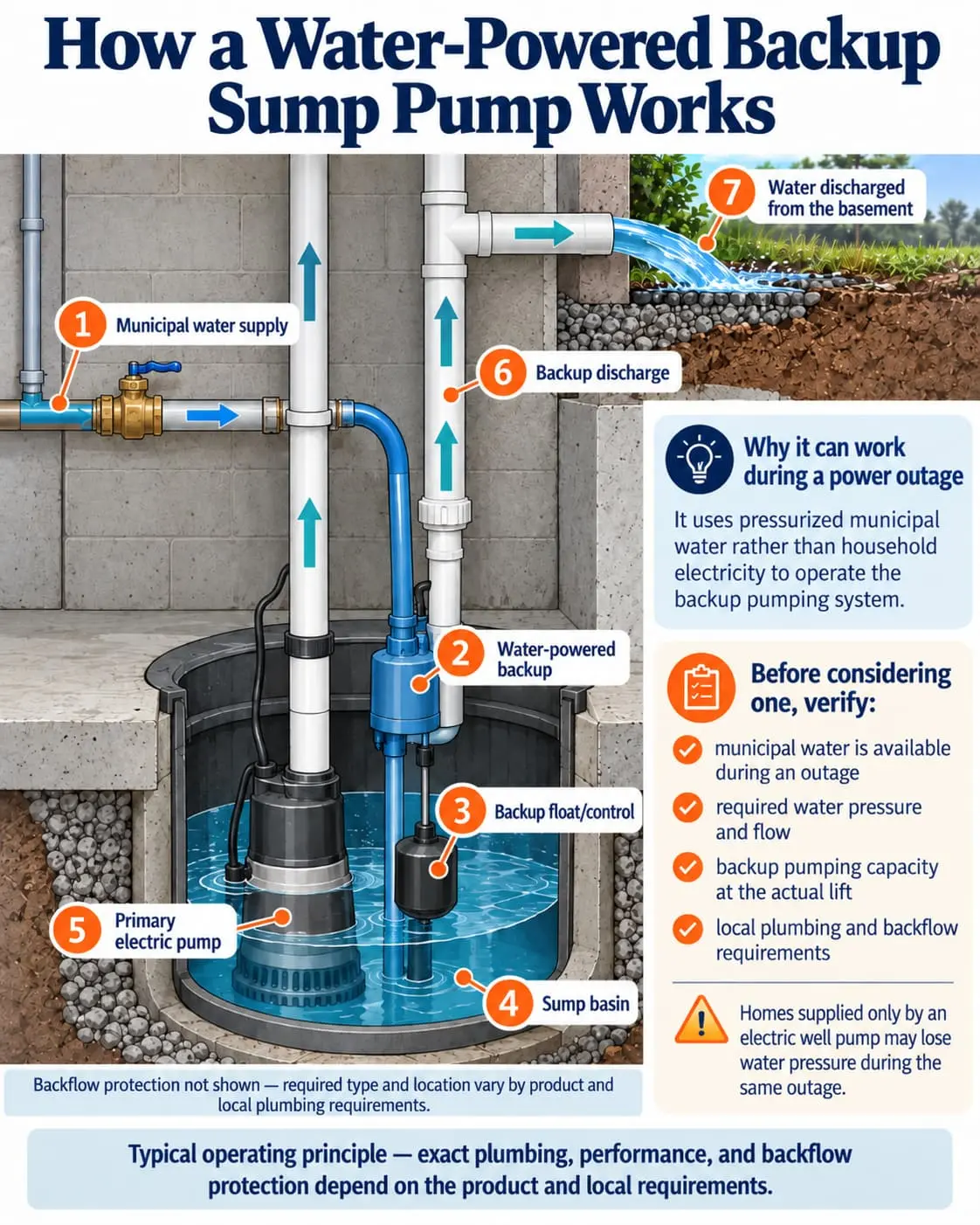
Water-powered vs. battery vs. generator
| Backup type | Main strength | Main limit | Best fit |
|---|---|---|---|
| Water-powered backup pump | No battery required; can operate during an electrical outage as long as adequate municipal water pressure remains available. | Consumes potable water; requires municipal supply, plumbing approval and adequate pressure | Home with reliable city water and a compliant installation. |
| Dedicated DC battery backup pump | Automatic protection for outage, primary-pump failure or high water depending on float setup | Runtime and output depend on battery condition, head and duty cycle | Most homes needing an independent second pump and automatic handoff. |
| Inverter powering an AC pump | Can use a familiar pump and large battery bank when engineered correctly | Compatibility, surge current, battery capacity and transfer controls matter | System designed as a complete electrical backup, not improvised during a storm. |
| Portable/standby generator | Can support more than the sump system | Fuel, transfer, placement and carbon-monoxide safety; not always unattended | A broader outage plan with safe professional installation and operation. |
Questions for the installer and water utility
- Is a water-powered sump backup permitted at this address?
- Which backflow-prevention assembly is required, and who must test it?
- What dynamic pressure and flow were measured at the proposed connection?
- What backup flow should I expect at my actual vertical lift and discharge layout?
- Is the supply line dedicated and sized exactly as the selected manual requires?
- Where will the combined discharge terminate, and can it freeze or recirculate?
- Will a high-water or pump-running alarm still notify me during a power outage?
- How will the system be tested without disabling the primary pump unsafely?
Red flags
- A seller quotes “gallons per hour” without asking about pressure and lift.
- The plan omits a backflow device or says one rule applies nationwide.
- The home uses a well, but nobody explains how water pressure will exist during an outage.
- The discharge is tied in without confirming both pumps can operate without one forcing water through the other.
- There is no practical test or alarm plan after installation.
Sources and scope
Requirements vary by model and jurisdiction. Use the exact equipment manual and local authority when either is more specific than this guide.
- Liberty Pumps — SJ10 SumpJet water-powered backup — Municipal-water requirement, pressure range and manufacturer performance caveats.
- Zoeller — 540 FLEX water-powered backup — Water-powered backup configuration and supply/discharge sizes.
- Ohio EPA — Backflow Prevention and Cross-Connection Control Manual — Local water purveyor/building-department review may be required for water-operated sump pumps.
- CDC — Safety Guidelines: Reentering Your Flooded Home — Electrical, sewage and generator safety after flooding.